close to the clouds, we sway like stone
“Tutti tornavano sulle stesse montagne da trenta, quaranta, cinquant’anni, e come me preferivano quelle trascurate dagli alpinisti, i valloni abbandonati in cui niente sembra cambiare mai. Un uomo con i baffi bianchi mi raccontò che per lui era un modo di ripensare alla sua vita. Era come se, attaccando lo stesso vecchio sentiero una volta all’anno, si addentrasse tra i ricordi e risalisse il corso della propria memoria. Eh già, non c’è niente come la montagna per ricordare.”
Le otto montagne, Paolo Cognetti
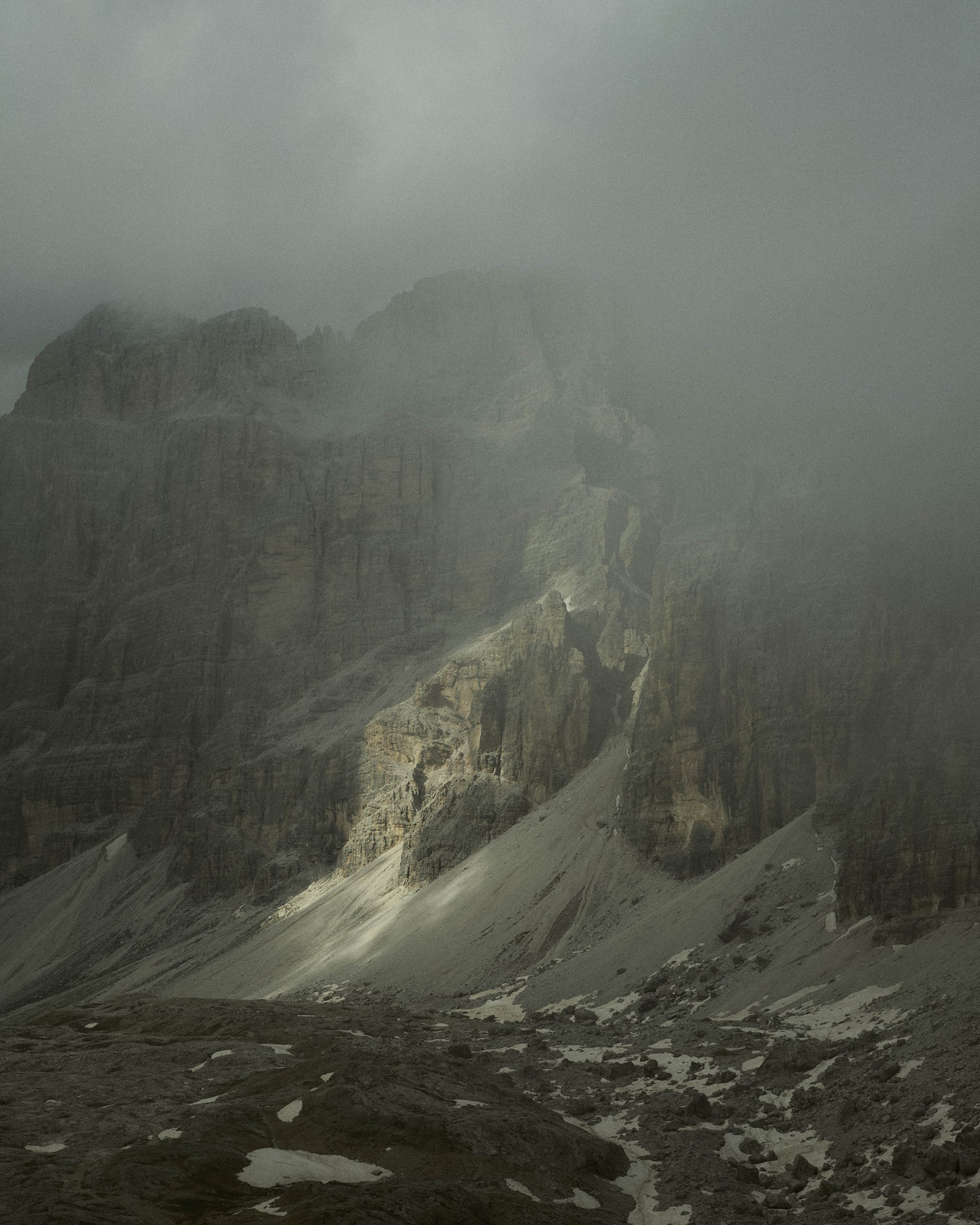
In contrast to other, less celebrated and renowned mountain ranges, the Dolomites have long stood as a favored destination for millions of visitors each year. Lagazuoi is no exception to this renown, and it is undeniable that such prominence imparts a partially “touristicized” identity to a place which, in essence, would be its very opposite.
“Close to the clouds, we sway like stone” unfolds as a visual narrative in which the morphology of the landscape is interwoven with the heterogeneity of the human condition, rendering each an archetype of the other. The shifting meteorological conditions and the succession of seasons undeniably shape the transience of the Lagazuoi’s terrain, just as much as the varied human presence that ascends to its summit.
Yet, in the first light of dawn and the fading glow of dusk, the mountain reveals its truest nature: a mystical, breathtaking realm where time appears suspended, and where one may reconcile with their most distant and introspective thoughts. It was there that the vision emerged; it was in that moment that I understood why this place felt so profoundly necessary.

Compose each slide from any blocks.

Mix images, text, buttons and more.
Each group becomes one slide.